This festive season, use these experts tips on how to retain nutrients, prevent sugar spikes and make traditional fasting staples healthier.Are deep-fried kuttu pooris and pakodas, greasy sabudana vadas and starch-heavy foods regulars on your Navratri menu? Healthier cooking methods and balanced portions can help reduce the risk of weight gain, acidity, sluggishness and sudden energy crashes.
Kuttu (buckwheat flour), singhara (water chestnut flour), and samak (barnyard millet) add variety and nutrients to your plate, but how you prepare them matters just as much, experts say.
Heavy vrat meals can leave you sluggish
Breaking a prolonged fast with a large, carbohydrate-rich meal can cause a rapid rise in blood glucose and insulin, followed by heaviness, sleepiness or renewed hunger in some people. Fried foods also add calories and may worsen acidity, says dietician Nashra Gufran of Shalby International Hospital, Gurugram.
Cut excess oil without losing flavour
“One of the biggest mistakes people make during fasting is relying too heavily on fried foods,” says chef Harpal Singh Sokhi.
“Instead of deep-frying sabudana vadas or kuttu pooris, try air-frying, baking or preparing them on a tawa with minimal ghee. Roasting makhana, steaming vegetables and using fresh curd-based accompaniments are other excellent options. Fasting should give your digestive system a lighter experience, not burden it with excess oil, sugar and starch,” he adds.
Nutritionist Neha Ranglani also recommends measuring oil for sautéing or shallow cooking and avoiding repeatedly reheating or reusing frying oil.
Swap your vrat favourites with these
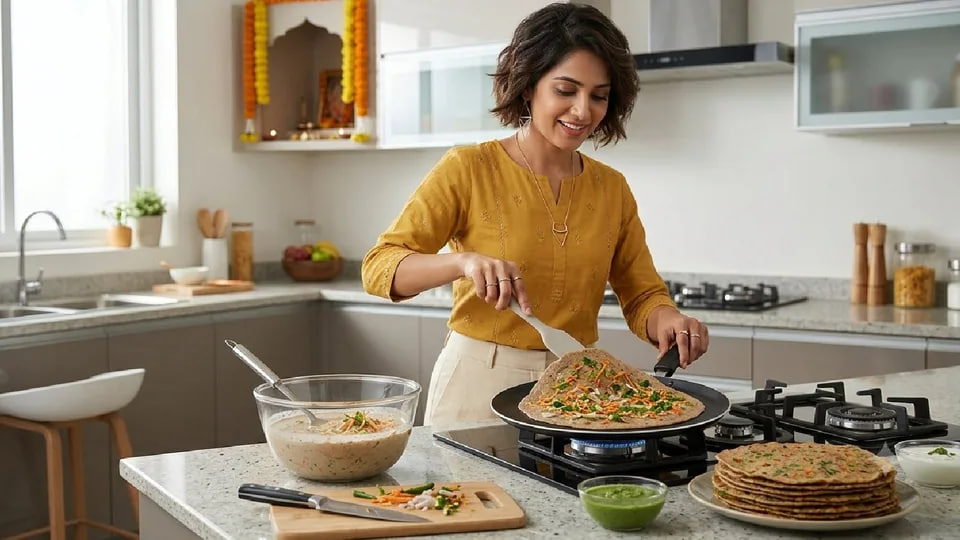
- Kuttu: Prepare rotis, pancakes, shallow-cooked parathas or cheela with grated vegetables, cumin and green chilli, using minimal ghee
- Singhara: Try steamed dumplings, lightly cooked pancakes or small rotis
- Samak: Make vegetable-rich pulao or khichdi with less oil, or try a curd-based rice bowl
- Sabudana: Replace frequent servings of deep-fried vadas with measured portions of sabudana khichdi or appe
(Inputs by chef Harpal Singh Sokhi)
Retain more nutrients with these cooking tips
- Steam or pressure-cook: These methods, along with shallow cooking and one-pot dishes, can help retain nutrients and make meals easier to digest
- Limit deep-frying: Prolonged exposure to high temperatures can reduce certain heat-sensitive vitamins and antioxidants. Deep-fried food also absorbs more oil, raising its calorie density and making it easier to overeat
- Avoid draining excess water: Doing this, especially after cooking samak rice, can cause water-soluble vitamins and minerals to leach away. Use just enough water to cook the grain, wherever practical
Build a balanced Navratri vrat thali with these five elements
- Complex carbohydrates: 1–2 thin kuttu, singhara or rajgira rotis, or a small bowl of samak rice or khichdi
- Protein: Paneer or tofu cubes, thick curd or a handful of roasted peanuts
- Vegetables: Cucumber, boiled bottle gourd or pumpkin, or lightly sautéed potatoes cooked in minimal oil
- Healthy fats: 5–6 almonds or roasted makhana
- Fruit (optional): Apple, papaya or pomegranate
Pair fasting staples with protein-rich accompaniments such as paneer, nuts and seeds, or tofu and suitable plant-based yoghurt, suggests Sokhi.
“Portion control is key. So, keep the plate colourful but not overloaded,” says Dr Amit Mittal, gastroenterologist at Marengo Asia Hospitals, Gurugram.